PV Substructures & Solar Mounting Systems: The Complete Guide 2026

PV substructures and solar mounting systems: what you need to know
A PV substructure (also called a solar mounting system, PV mounting system, or PV fixing system) is the load-bearing link between solar modules and the roof. It transfers dead load, wind and snow loads reliably into the roof structure and keeps the modules securely in place for decades. This guide gives a complete overview: what a substructure must achieve, which components belong to it, which system fits which roof, and what B2B customers should look for when sourcing one.
What is a PV substructure?
Solar mounting system, PV mounting system, PV substructure and PV fixing system all describe the same thing in practice: the complete set of components that connect solar modules to the roof. Depending on the roof type, the construction differs fundamentally – a tiled roof needs different fixing points than a trapezoidal sheet roof or a flat roof. What all systems share is the task: transferring loads safely without damaging the roof skin, for the entire service life of the installation.
CLICKWERK, based in Hamburg, develops and manufactures substructures for the three most common roof situations directly as a manufacturer, with no middlemen – with a 25-year warranty on the T1 and F1 systems.
The three roof types at a glance
Tiled roof: solar mounting system T1
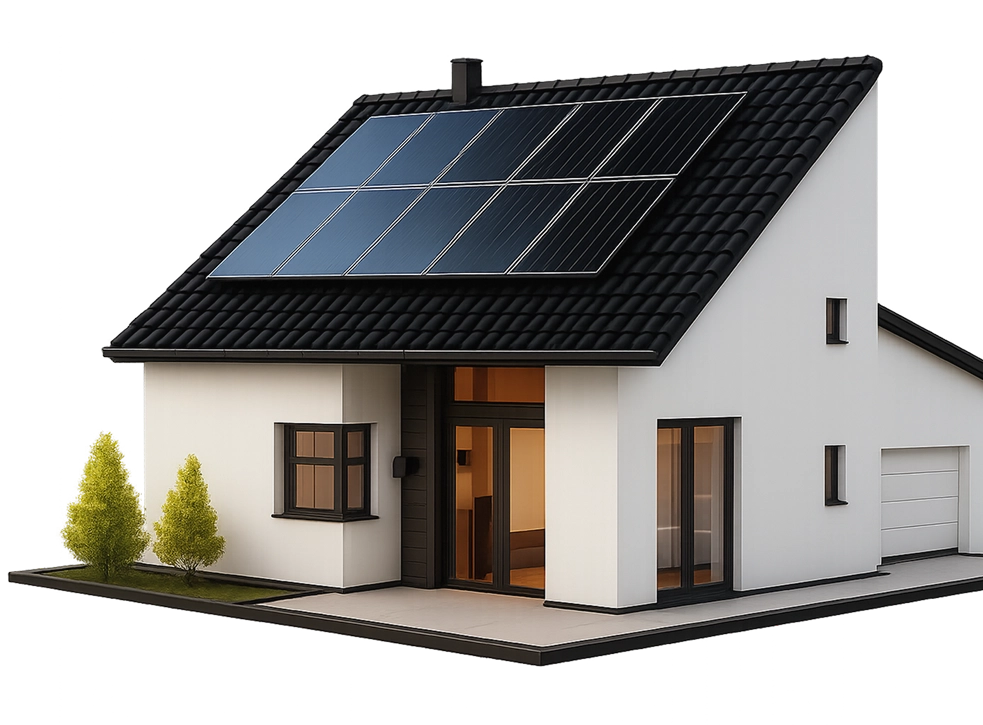
On the classic pitched roof with clay or concrete tiles, the T1 Tiled Roof system handles the PV fixing. A multi-position (5-way) adjustable roof hook with a rotating hook head channels loads into the rafters without damaging the tiles, and allows both portrait and landscape mounting with the same part. The aluminium mounting rail permits a hook spacing of up to 180 cm. More in the tiled-roof system guide.
Trapezoidal sheet: solar mounting system M1
Trapezoidal sheet is widely used in commercial, industrial and agricultural construction. The M1 Trapezoidal Sheet system relies on a single rail element (short rail, 400 × 80 × 50 mm) with a 45-degree cut on both sides – universal for portrait and landscape mounting, with 16 + 2 fixing points and integrated cable routing. Details in the trapezoidal sheet mounting guide.
Flat roof: solar mounting system F1
On bitumen, membrane and gravel roofs, an elevation system takes on the role of the substructure. The F1 Flat Roof system uses an aerodynamic design to deflect the wind, reducing the ballast required, and works without penetrating the roof skin – certified to EN 1090-1. More in the flat-roof elevation guide.
Substructure components: a short glossary
Regardless of roof type, every substructure involves similar components – often known by several common names:
- Roof hook (PV roof hook) – anchors the substructure in the roof truss and transfers the load into the rafters; relevant only on pitched roofs.
- Mounting rail (profile rail) – connects the fixing points into a continuous plane and holds the module clamps.
- Module clamp (universal or end clamp) – fixes the solar modules to the rail; a universal clamp can usually be used as either a mid or end clamp.
- Earthing clamp – establishes equipotential bonding for the system, rated for defined cable cross-sections.
- Cable holder / cable routing – keeps module cables tidy and protected on the profile instead of lying unprotected on the roof.
- Elevation – brings the modules on a flat roof to the correct tilt angle, usually in a south or east-west orientation.
- Ballasting – secures a flat-roof elevation system against wind uplift using weights, as an alternative to penetrating the roof skin.
Structural design: accounting for wind and snow load correctly
Every substructure must safely transfer dead load, wind load and snow load into the roof structure – according to the Eurocode framework with the national DIN annexes. The specific design is always project-related and belongs in the hands of a structural engineer. A detailed look at the relevant norms and load assumptions is available in the guide to structural norms for PV mounting systems.
Manufacturer, wholesale and B2B: where to source a substructure
PV substructures can be sourced through wholesalers, multi-brand shops, or directly from the manufacturer. CLICKWERK is both manufacturer and supplier: development and production take place in Hamburg, and shipping from the Hamburg warehouse reaches the entire EU usually within 2–4 working days – with no middlemen. The offering serves both B2B customers (installers, trade businesses, wholesalers) and private homeowners.
Component prices become visible after free registration in the shop – this way, regular customers and B2B partners always see current, project-specific terms instead of flat list prices.
Frequently asked questions about PV substructures
What does a solar mounting system cost?
The price depends on roof type, number of modules and system size. CLICKWERK shows project-specific prices after free registration in the online shop, rather than working with flat list prices that rarely match the actual installation.
Can I order as a private individual, or only as a business?
Both are possible. CLICKWERK supplies B2B customers – installers, trade businesses and wholesalers – as well as private homeowners, directly from Hamburg.
How do I find the right substructure for my roof?
The roof type decides: a tiled roof leads to the T1 system, trapezoidal sheet to the M1 system, a flat roof to the F1 system. The system selection guide walks you through the decision step by step.
Further guides
- Solar mounting system for tiled roofs: guide
- PV mounting on trapezoidal sheet: guide
- Planning flat-roof PV mounting
- Which PV mounting system for which roof
- PV mounting checklist: step by step
- Structural norms for PV mounting systems
- oneClick: free PV planning software with structural report
Planning a specific project? Explore all solar mounting systems in the shop or get in touch with CLICKWERK in Hamburg directly via our contact form – we will advise you on the right PV substructure for your roof.
Questions about this topic?
Our team advises you personally – on mounting systems, oneClick or your project.