Which PV Mounting System for Which Roof
Which PV mounting system for which roof – getting oriented before you buy
The question „which PV mounting system for which roof?" stands at the start of every well-planned photovoltaic installation. The modules themselves are interchangeable across manufacturers – the mounting structure, however, must match the roof type exactly. A tiled roof calls for different fixing points than a trapezoidal sheet roof in industrial construction, and a flat roof places entirely separate demands on statics and wind load. Choosing correctly here saves material and installation time and avoids structural risks. As a manufacturer based in Hamburg, CLICKWERK offers a dedicated system for each of the three most common roof types – Made in Germany, shipped from the Hamburg warehouse usually within 2–4 working days.
Step 1: Determine the roof type
Before selecting a mounting system, first identify the roof type. In practice there are three broad groups, each requiring its own fixing principle:
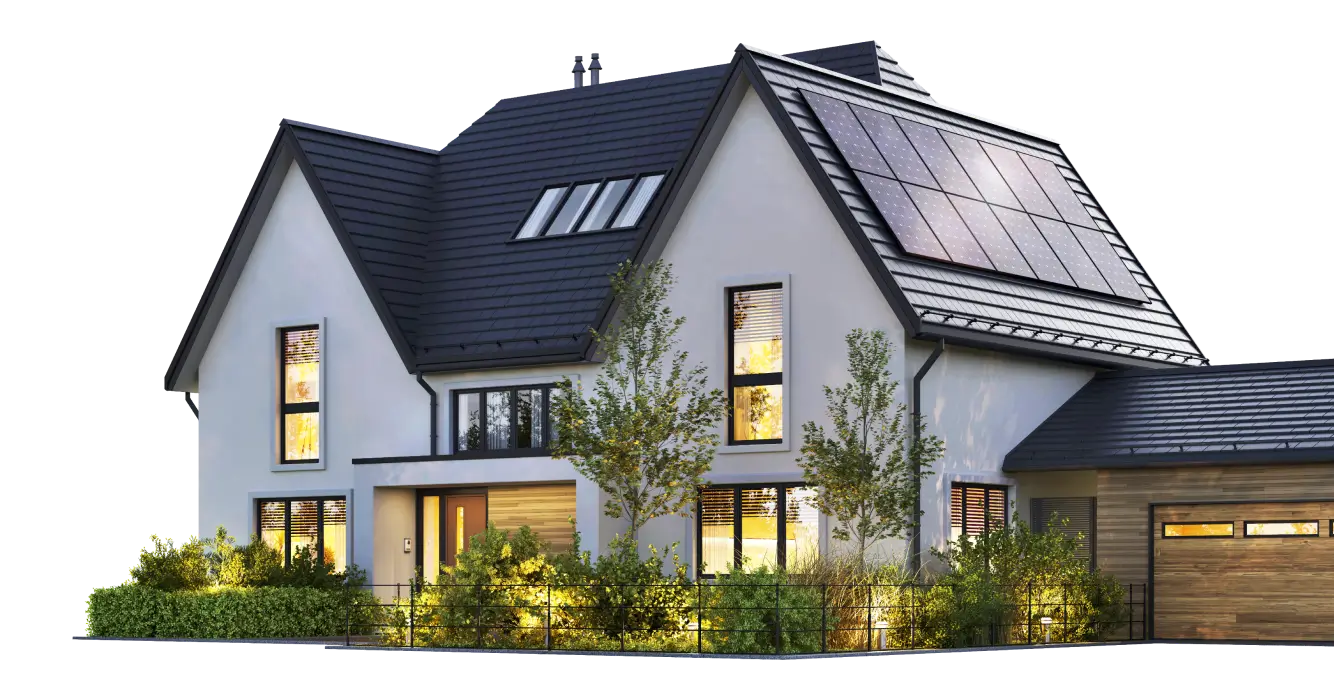
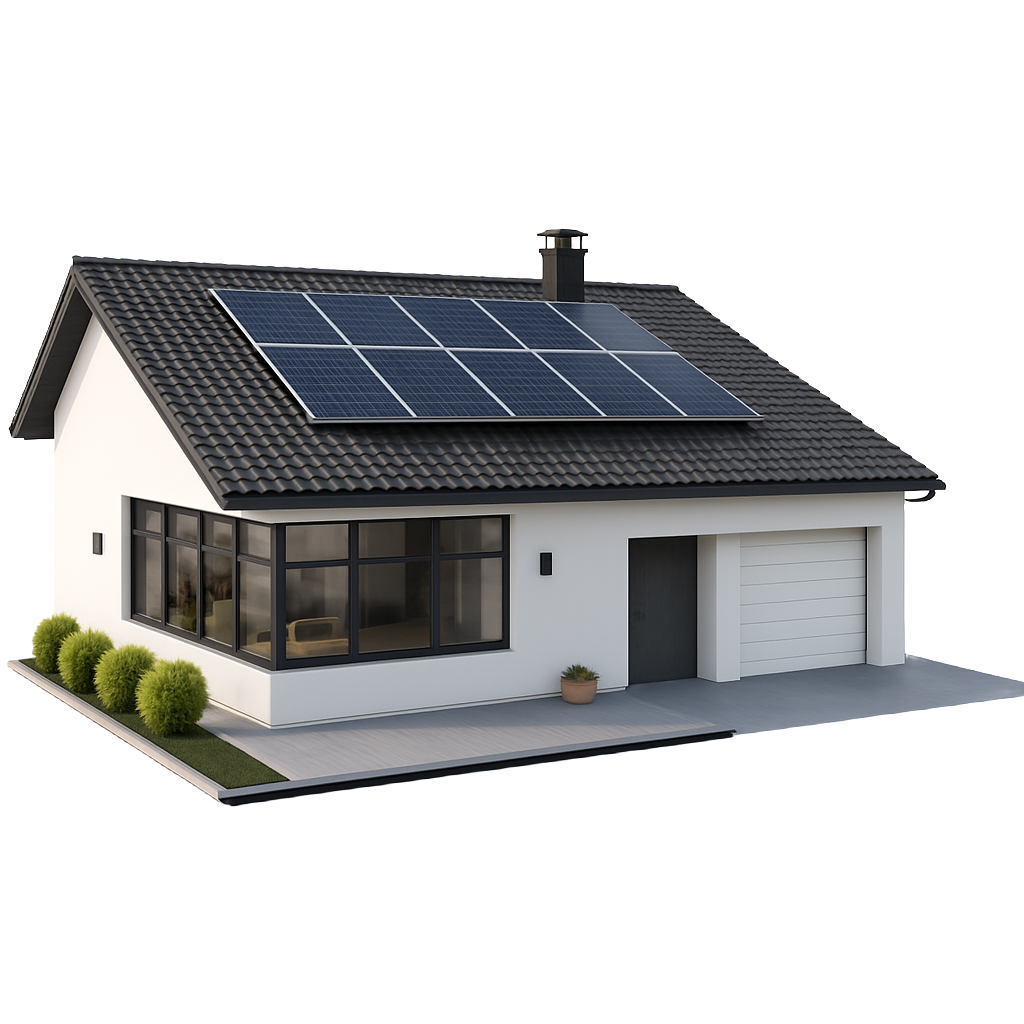
- Pitched roof with tiles – the classic residential roof with clay or concrete roof tiles (pantiles).
- Trapezoidal sheet roof – the trapezoidal profile used in commercial, industrial and agricultural construction.
- Flat roof – bitumen, membrane or gravel roofs with no notable pitch.
Which PV mounting system for which roof – the three solutions at a glance
Tiled roof: the T1 system
The T1 Tiled Roof system is designed for the pitched tiled roof. Its core is a multi-adjustable (5-way) roof hook that combines an extended and a standard version in a single component – a universal 2-in-1 design. The rotating hook head allows vertical (portrait) and horizontal mounting without additional material. Loads are transferred into the rafters without damaging the tiles, and the system is compatible with all common clay and concrete roof tiles. The aluminium mounting rail permits a hook spacing of up to 180 cm, meaning fewer fixing points and less material. Thanks to the click system (click-clack method), a cordless screwdriver is all you need for installation. In total, T1 comprises 8 components – including a universal clamp, an end cap with a metal insert and an earthing clamp for cable cross-sections of 6–16 mm² as well as lightning conductor wires with an 8 mm diameter. CLICKWERK grants a 25-year manufacturer warranty on the system.
Trapezoidal sheet: the M1 system
On the trapezoidal profile in commercial and industrial construction, M1 Trapezoidal Sheet is used. The concept relies on a single rail element – the short rail measuring 400 × 80 × 50 mm – for nearly any installation situation, portrait as well as landscape. A 45-degree cut on both sides makes the profile universally usable without additional parts. With 16 + 2 fixing points (four holes per side plus two central holes for landscape mounting), the profile can be fixed securely. An integrated cable guide ensures the cables are fastened directly to the profile and never lie unprotected on the sheet metal. The material-saving single-rail concept enables fast installation; here, too, a 25-year manufacturer warranty and Made in Germany apply.
Flat roof: the F1 system
For bitumen, membrane and gravel roofs, F1 Flat Roof is available. The aerodynamic, low-ballast elevation system for framed modules deflects the wind and thus reduces the wind load – which protects the roof statics because less ballast is required. Assembly is tool-free in three steps: build the frame, click in the modules, add ballast; only the clamps are fixed with the cordless screwdriver. For a south orientation (single elevation) 5 components per module row are needed, for east-west (double elevation) 6 – each with a 12-degree module tilt. Ballasting uses standard off-the-shelf stones (20 × 10 × 6 cm, three per rail). F1 is certified to EN 1090-1 and is made of ZM-coated steel, with clamps and small parts in stainless steel 1.4301 (V2A). Here, too, CLICKWERK provides a 25-year warranty.
FAQ – common questions on system selection
How do I find out which mounting system I need?
The roof type is decisive. A tiled roof leads to T1, a trapezoidal sheet to M1, a flat roof to F1. If you are unsure, look at the roof covering and – for flat roofs – the waterproofing (bitumen, membrane or gravel). In case of doubt, we are happy to advise you personally.
Can I freely choose between portrait and landscape mounting?
With T1, the rotating hook head allows both orientations without additional material. With M1, the 45-degree cut on both sides of the short rail likewise enables use in portrait as well as landscape.
How do I obtain a structural report?
For T1 and M1, the structural report can be created yourself in just a few minutes using the oneClick planning software. This puts the structural verifications at your fingertips before you order.
Choose the right system now
Do you know your roof type and want to order the right system straight away? For a complete overview of PV substructures, components and structural design, see our complete PV substructure guide. In the shop you will find all mounting systems and components at a glance. If you are still unsure about your choice, feel free to get in touch – we will help you find the right substructure for your roof.
Questions about this topic?
Our team advises you personally – on mounting systems, oneClick or your project.