Planning Flat-Roof PV Mounting
Flat-roof PV mounting: the right system for every roof surface
Planning a photovoltaic system on a flat roof raises different questions than on a pitched roof. With flat-roof PV mounting, the modules do not lie parallel to the roof skin but are elevated to achieve a useful tilt angle and therefore a good yield. At the same time, the structure must not overload the roof and has to withstand wind. This is exactly where it is decided whether a flat-roof mounting system works in practice. This guide explains the key planning parameters and shows what matters when choosing a system.
Tilt angle and orientation
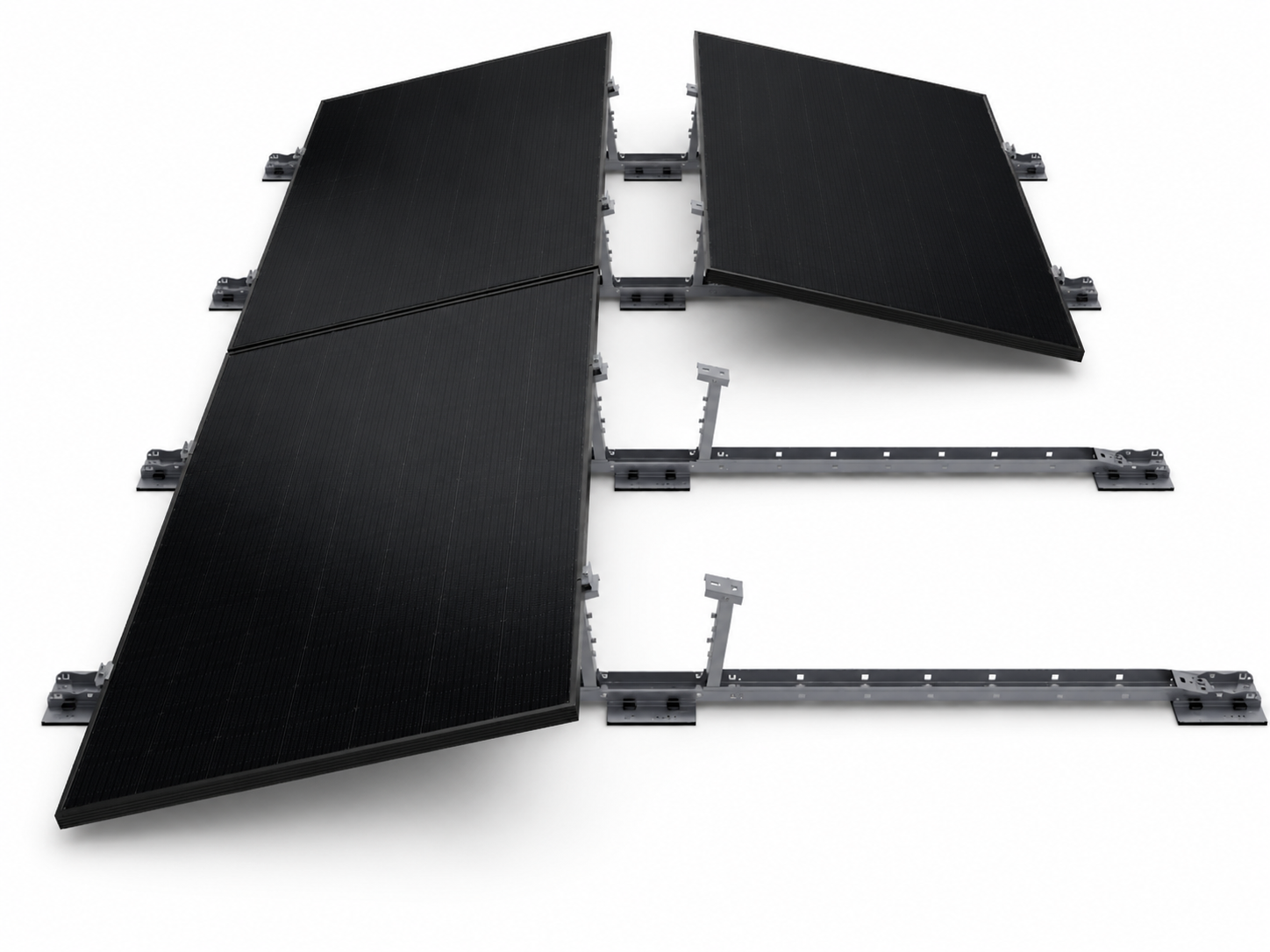
On a flat roof, you set the module tilt angle via the substructure. Shallow angles reduce the wind-exposed area and the row spacing needed to avoid shading; steeper angles can increase the yield per module. The F1 Flat Roof system from CLICKWERK works with a module tilt of 12 degrees – a shallow angle that deliberately keeps the wind load low. For orientation, you can choose between a south layout (single elevation) and an east-west layout (double elevation). East-west uses the roof area more densely, as the rows stand back to back and shade each other less.
Ballasting against wind instead of heavy weighting
The central challenge on a flat roof is wind: since the system usually does not penetrate the roof skin, it must be secured against uplift. This is traditionally done with ballast – but the more weight, the greater the load on the roof structure. The F1 system therefore takes an aerodynamic approach: the profile deflects the wind and thus reduces the wind load, so less ballast is required. Ballasting uses standard commercial blocks measuring 20 x 10 x 6 cm, three per rail, housed in the base rail or in optional ballast carriers or trays. This keeps the elevation low on ballast and protects the roof statics. The actual ballast quantity required depends on location, building height and wind and snow load zones and belongs in every structural design.
Penetration-free solution for sensitive roof skins
Bitumen, foil and gravel roofs should ideally not be drilled through so that watertightness is preserved. The F1 system is designed for exactly these roof types and works as an elevated, ballasted system without intervening in the roof skin. On request it is available with a building-protection mat that additionally protects the roof surface. The system is made from ZM-coated steel; clamps and small parts are made from stainless steel 1.4301 (V2A). The load-bearing connections are riveted and can be finely adjusted on site to the structural conditions. The system is certified to EN 1090-1.
Few components, tool-free assembly
A practical advantage on the flat roof is the lean build: the F1 system requires only 5 components per module row for south orientation and 6 for east-west. The components include base element, base foot, mid clamp, end clamp and connector. Assembly is tool-free in three steps: build the frame, click in the modules, ballast. Only the clamps are fixed with a cordless screwdriver. This saves time and reduces the number of possible error sources on site. CLICKWERK grants a 25-year warranty on the F1 system, which is manufactured in Hamburg and shipped EU-wide from stock – usually within 2 to 4 working days.
Choosing the right system
For other roof types, CLICKWERK offers further systems: the T1 Tiled Roof for pitched roofs with clay and concrete tiles, and the M1 Trapezoidal Sheet for commercial, industrial and agricultural buildings. You will find an overview of the entire range in the Mounting Systems section.
Frequently asked questions about flat-roof PV mounting
What tilt angle makes sense?
That depends on orientation, row spacing and wind load. The F1 system uses a 12-degree module tilt – a shallow angle that keeps the wind-exposed area small and enables low-ballast elevation.
Does the roof have to be drilled for fixing?
No. The F1 system works as an elevated, ballasted system for bitumen, foil and gravel roofs without penetrating the roof skin. A building-protection mat can be added on request.
How is it secured against wind?
Via an aerodynamic profile shape that reduces the wind load, combined with ballast from standard blocks (20 x 10 x 6 cm, three per rail). The exact ballast quantity results from the structural design for your location.
Secure the right flat-roof system now
Are you planning a PV system on a flat roof and want to choose the right elevation? For a complete overview of PV substructures, components and structural design, see our complete PV substructure guide. Browse the full range or get in contact with CLICKWERK in Hamburg directly for individual advice. We support you in designing your flat-roof project.
Questions about this topic?
Our team advises you personally – on mounting systems, oneClick or your project.